
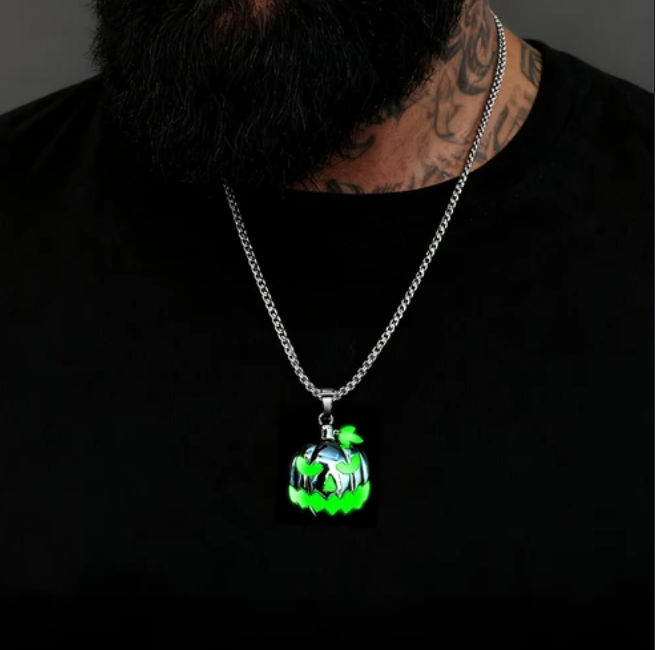
The Mistake That Kills Most Halloween Looks
The costume gets weeks of planning. The jewelry gets five minutes at the end. That mismatch is why so many Halloween looks feel 90% finished rather than completely realized. The right accessories aren't decoration, they're the difference between a costume that reads as a character and one that reads as a person wearing a costume.
The good news is that choosing Halloween jewelry well isn't complicated once you understand what each piece is doing and why it matters. This guide gives you a framework for thinking about costume accessories at every level, from the principles down to specific piece types, style pairings, and the common mistakes that are worth avoiding.
What Jewelry Actually Does for a Costume
Jewelry in a costume context does three things that clothing cannot. First, it communicates status and wealth within the character's world. A vampire aristocrat and a street-level vampire are both wearing dark clothing, it's the jewelry that separates them. Second, it communicates time period. A Victorian ghost looks generic without period-appropriate accessories. Add the right cameo brooch or locket and the character becomes historically specific and convincing. Third, it adds texture and dimension at the detail level that cameras, party lighting, and close conversations all reveal.
When jewelry is absent, all three of these signals are absent with it. The costume reads as incomplete at every level where those signals would have spoken.
Matching Jewelry Style to Costume Category
Before selecting individual pieces, identify your costume category. Different categories have different jewelry logic:
Gothic/Vampire: Dark metals dominate here, blackened silver, oxidized brass, dark pewter. Cross pendants, skull motifs, ornate Victorian-style brooches, chokers with stone accents, and layered chains all serve this aesthetic. The goal is aristocratic darkness, not cheap darkness. One well-made piece reads better than five cheap ones.
Witch/Occult: Moon phases, pentagram motifs, snake imagery, crystal points, and celestial symbols. Green and black gemstone accents add color without breaking the palette. Layered necklaces at different lengths create the visual complexity associated with this character type. Earrings should be long and dramatic, movement matters for this costume category.
Skeleton/Undead: Skull jewelry is the obvious choice and it works. The important variable is finish, matte and oxidized reads more sinister and authentic than shiny chrome skull motifs. Stack rings across multiple fingers for skeletal hand effect. Layer chokers for neck coverage.
Fantasy/Dark Royalty: Ornate and layered. Crowns, statement rings, oversized pendants, and chandelier earrings. The aim is excess in service of power. More is more for this category if the pieces have visual weight and craftsmanship.
Minimalist Horror: A single well-chosen piece works harder than a cluttered set. A blood-red stone ring on an otherwise bare hand. A single bone-shaped pendant. Restraint creates unease more effectively than obvious overloading for certain horror aesthetics.
Earrings: The Most Efficient Costume Upgrade Available
If you can only invest in one jewelry piece for a costume, make it earrings. They are the most visible accessory on any person in a crowd, in photographs, and in any direct face-to-face interaction. They frame the face at the exact focal point that people look at during conversation. A strong pair of earrings transforms a face and communicates character before a single word is spoken.
Sterling silver Halloween earrings in a gothic hoop design solve multiple problems simultaneously. The hoop silhouette reads as intentional rather than novelty. The skull motif is specific enough to be thematic without being cartoonish. Sterling silver at S925 grade maintains its appearance through a full evening of wear, no fading, no green skin, no tarnishing under warm lighting. For a vampire, witch, skeleton, or gothic character, these work without modification. For most other dark costumes, they serve as the grounding piece that everything else builds around.
What to avoid in Halloween earrings: excessively long dangles that catch on costume fabric and get pulled out, lightweight plastic novelty pieces that move and swing unpredictably, and anything requiring frequent adjustment or repositioning throughout the evening.
Necklaces: How to Layer Effectively
Halloween costumes benefit from layered necklaces more than most everyday contexts because the layering adds visual complexity that reads as character depth. Here's how to layer without the result looking accidental:
The rule of three lengths: Use a choker at the neck (12–14"), a mid-length pendant at the mid-chest (18–20"), and a longer statement piece at the lower chest (24–26"). Each length occupies its own vertical zone without competing for the same visual space.
Vary the chain weight: A delicate chain, a medium chain, and a heavier chain together create visual rhythm. All three at the same weight creates visual flatness.
Let one pendant dominate: If you use three necklaces, only one should carry a significant pendant. The other two are structural, they add lines and texture but their job is to support the hero piece, not compete with it.
For gothic and vampire costumes: cross pendant at mid-length, choker with dark stone, longer fine chain without pendant. For witch costumes: crescent moon pendant at mid-length, layered crystal point chain, choker with snake or pentagram charm.
Rings: The Detail That Works in Every Photo
Rings are the most photographically effective Halloween accessory because hands appear constantly, in the background of photos, gesturing in conversation, holding drinks at parties. A considered set of rings creates a character-consistent image at every angle.
Stack across multiple fingers rather than loading one. Two or three rings on one hand reads as deliberate. Four or five reads as decorative overload. The thumb is underused in ring styling and an oversized skull or signet piece there creates strong visual impact without crowding the other fingers.
Adjustable band rings are practically superior for Halloween specifically. Finger size fluctuates with temperature changes from indoor to outdoor environments. An adjustable band handles those changes without the risk of a fixed ring becoming too tight or too loose as the evening shifts.
The Durability Question: What Survives a Halloween Party
Halloween parties are physically demanding on jewelry. You're moving through crowds, dancing, handling food and drinks, potentially going from cold outdoor temperatures to warm interiors. Pieces that can't handle those conditions will fail visibly, tarnishing under warm light, losing plating on skin contact with sweat, or simply breaking from the movement and contact of an active evening.
Sterling silver (S925) and stainless steel are the two materials that consistently survive. Avoid gold-plated pieces for Halloween unless you're certain they're high-quality plating on solid base metal. Avoid purely decorative "costume jewelry" for anything you want to look good in photos at the end of the evening. The failure of cheap pieces is always most visible in photographs, under direct flash and artificial lighting, tarnishing and damaged plating become the most prominent thing in the image.
Planning Beyond Halloween Night
The most cost-effective Halloween jewelry decision is buying pieces you'll actually wear again. Gothic aesthetics, skull motifs, dark metals, and celestial designs are all year-round in contemporary fashion. A good skull hoop earring or oxidized cross pendant doesn't disappear on November 1st, it becomes part of a regular rotation if it was well-made to begin with.
This reframes the budget question. A quality piece at twice the price of a disposable novelty option costs the same per wear within one year of regular use. A piece built to last in sterling silver or quality stainless steel is not a Halloween expense. It's a jewelry investment that happens to debut at Halloween.
The One-Piece Rule for Late Decisions
If you're making Halloween jewelry decisions late and don't have time to build a considered set, apply the one-piece rule: choose the single best piece for your costume character and wear nothing else. One exceptional, character-appropriate piece reads better than four mismatched average ones. A strong pair of gothic sterling silver earrings against an otherwise unadorned look has more presence than a cluttered set of novelty pieces that don't cohere.
Simplicity in service of a clear character always outperforms complexity in service of no clear direction. Know who your character is. Find the one piece that speaks for them. Let that piece do the work.