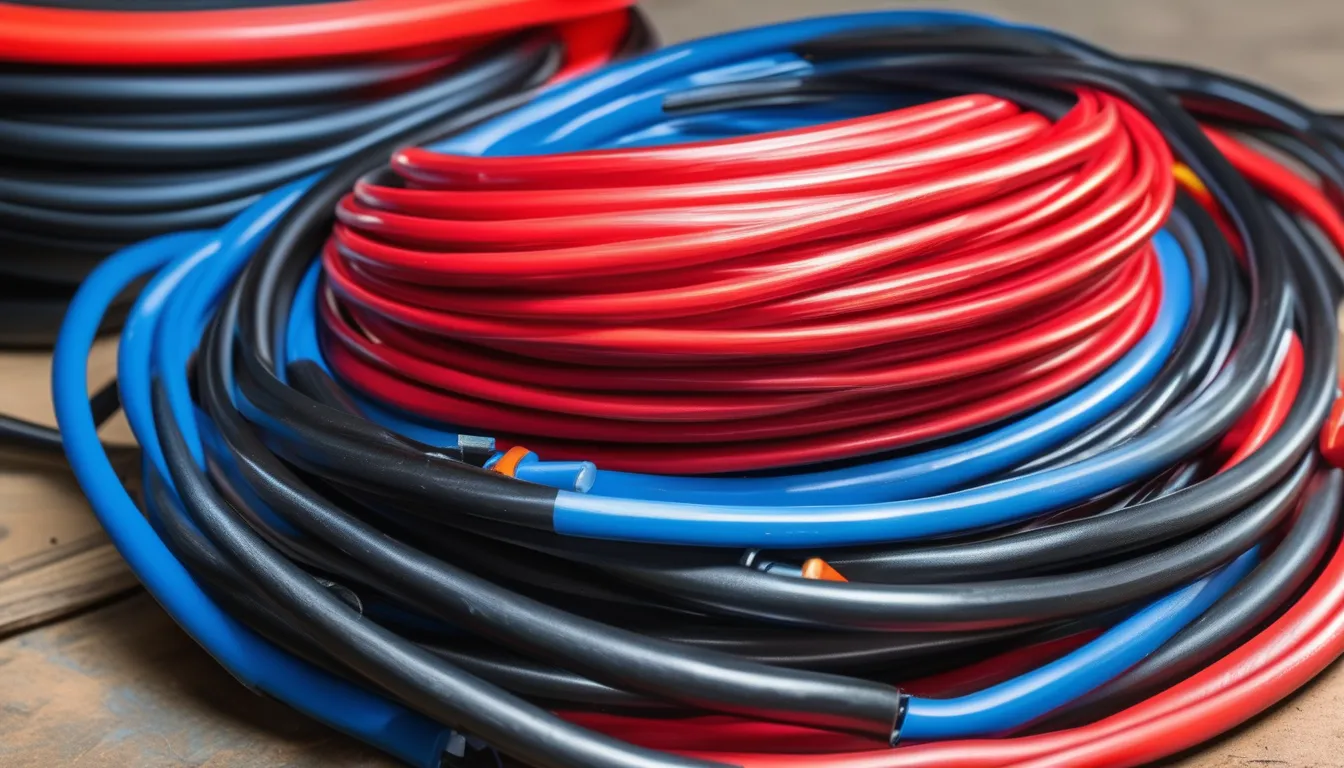
The Ultimate Guide to 6 AWG Wire: Everything You Need to Know About This Powerful Electrical Conductor

Proper understanding and utilization of electrical wiring are critical to ensuring the safety and efficiency of electrical systems. Among various electrical conductors, the 6 AWG wire stands out due to its robust capacity and versatility. This guide aims to delve into the technical characteristics, applications, and standards associated with 6 AWG wire. Readers will explore the wire's electrical properties, such as its current-carrying capacity and thermal rating, as well as its suitability for different installations. By highlighting real-world applications and best practices, the guide seeks to equip professionals and enthusiasts with the knowledge necessary to make informed decisions when selecting and using 6 AWG wire in their projects.

What is 6 AWG wire and why is it important?

Understanding wire gauge and its significance

Wire gauge is a critical concept in electrical wiring systems, denoting the physical size of the wire. It is defined by the American Wire Gauge (AWG) system, a standardized wire gauging system predominantly used in North America. The gauge number inversely correlates with the wire's diameter, meaning a lower gauge number indicates a thicker wire. A key reason for understanding wire gauge is its direct impact on the wire's current-carrying capacity, electrical resistance, and overall performance in an electrical circuit. Selecting the appropriate wire gauge ensures electrical systems run efficiently, safely, and comply with wiring regulations. The 6 AWG wire is a popular choice JOCA its ability to balance between thickness and flexibility, making it suitable for a broad range of applications.

Key characteristics of 6 AWG wire

The 6 AWG wire exhibits several crucial characteristics that make it desirable for certain electrical applications. Firstly, it has a diameter of approximately 0.162 inches (4.11mm) and can carry a substantial amount of current—typically up to 55 amperes in residential installations, depending on the insulation type and installation conditions. Additionally, its lower electrical resistance compared to higher-gauge wires translates to reduced energy loss over distance. The wire is also notable for its high thermal rating, allowing it to safely conduct electricity under increased temperature levels. Its copper or aluminum composition makes it highly conductive, with copper being more common due to its superior conductivity.

Common applications for 6 AWG wire

6 AWG wire is extensively used in various residential, commercial, and industrial settings due to its versatility and capacity. In residential applications, it is commonly implemented for wiring subpanels, large appliances such as electric stoves and ovens, and HVAC units where substantial current is required. In commercial environments, 6 AWG wire is often used for branch circuits, motor leads, and feeder lines, ensuring efficiency and safety in larger scale electrical layouts. Moreover, in renewable energy systems, such as solar panel installations, 6 AWG connects solar arrays to inverters with minimal voltage drop, optimizing energy transfer from modules to the power grid.

How does 6 AWG wire compare to other wire gauges?

Comparing 6 AWG to 8 AWG and other common sizes

When comparing 6 AWG to 8 AWG wire, the primary distinctions lie in their diameter, current-carrying capacity, and resistance. 8 AWG wire has a smaller diameter at approximately 0.128 inches (3.26mm) compared to the 6 AWG's 0.162 inches, resulting in a reduced ampacity of about 40 amperes in typical residential settings. The higher resistance of 8 AWG wire leads to greater energy loss over distance when compared to 6 AWG. While 12 and 14 AWG wires are prevalent in residential applications for lighting and outlet circuits, their smaller diameter and reduced ampacity (20 and 15 amperes, respectively) render them unsuitable for heavy-duty appliances or long-distance runs where minimal voltage drop is crucial. Thus, 6 AWG wire provides an optimal balance between size and performance for demanding electrical tasks.

Ampacity and voltage ratings of 6 AWG wire

6 AWG wire is characterized by its substantial ampacity, making it suitable for high-current applications. It can support up to 55 amperes in residential settings, with particular allowances made based on the insulation type and ambient temperature. Furthermore, 6 AWG wire typically supports voltage ratings of up to 600 volts, accommodating both low and high-voltage conditions found in various household and industrial installations. This combination of high ampacity and voltage resilience is instrumental in ensuring effective power transmission without overheating or excessive energy loss.

Pros and cons of using 6 AWG wire

The advantages of using 6 AWG wire include its high current-carrying capacity, significant thermal rating, and excellent conductivity, particularly when composed of copper. These characteristics make it ideal for wiring appliances with high power demands, installing subpanels, and integrating solar energy systems. However, some drawbacks are its larger size compared to higher-gauge wires, which may pose installation challenges in tight spaces, and its relatively higher cost, reflecting the increased material volume and quality, especially when using copper. Despite these considerations, the extensive benefits of 6 AWG wire in terms of efficiency and safety often justify its application in suitable electrical installations.

What are the different types of 6 AWG wire available?

THHN vs. THWN vs. NM-B: Understanding insulation types

When selecting the appropriate 6 AWG wire, understanding the differences between THHN, THWN, and NM-B insulation types is crucial. THHN (Thermoplastic High Heat-resistant Nylon-coated) wire is designed for indoor use and offers resistance to heat, making it suitable for environments exposed to high temperatures. THWN (Thermoplastic Heat and Water-resistant Nylon-coated) wire includes additional water resistance, making it apt for damp environments, such as outdoor installations. NM-B (Non-Metallic Sheathed Cable) wire, however, lacks the same level of heat and water resistance and is typically used for indoor, residential purposes. Each type has specific uses based on the particular environmental and regulatory needs of the project.

Stranded vs. solid 6 AWG wire: Which is best for your project?

Choosing between stranded and solid 6 AWG wire depends largely on the unique requirements of your project. Solid wire consists of a single core and is known for its rigidity and stability, rendering it ideal for permanent, straight-line installations. In contrast, stranded wire, composed of multiple smaller conductors twisted together, affords greater flexibility and is suited for applications requiring frequent movement or bends, such as in portable equipment or certain curved routings. The decision should thus be guided by the particular motion, flexibility, and installation needs of the project.

Copper vs. aluminum 6 AWG wire: Pros and cons

In the choice between copper and aluminum 6 AWG wire, several factors come into play. Copper wire is favored for its superior conductivity and resistance to oxidation, making it highly efficient for energy transfer and robust for long-term installations. However, it is more costly and heavier. Aluminum wire, by contrast, is lightweight and cost-effective, yet requires larger diameters to carry the same current as copper and is more prone to oxidation, which can lead to corrosion. Therefore, the selection involves considering project budget, weight, and conductivity demands to determine the most appropriate material.

How to choose the right 6 AWG wire for your project?

Considering voltage requirements and environmental factors

When selecting 6 AWG wire, it's crucial to consider the voltage requirements of your specific application. Higher voltage systems may impose additional insulation or material constraints to ensure safe and efficient operation. Furthermore, environmental factors such as temperature, moisture, and potential chemical exposure must be assessed. For instance, wires installed in high-temperature settings may need insulation materials with high heat resistance, while those exposed to chemicals may require specialized protective coatings to prevent degradation.

Selecting the appropriate insulation and jacket type

The choice of insulation and jacket type is integral to ensuring the durability and safety of the 6 AWG wire. Insulation materials such as PVC, XLPE, and Teflon offer varying degrees of flexibility, temperature resistance, and chemical tolerance, impacting their suitability for different environmental conditions. The jacket serves as the outermost protective layer and may need to be abrasion-resistant, UV-resistant, or flame retardant, depending on the installation location and potential hazards.

Determining the correct wire length and conductor count

Accurate measurement of wire length is essential to prevent voltage drop and ensure optimal electrical performance. Additionally, determining the correct number of conductors within the cable involves evaluating the specific electrical or communication requirements of the application. Multi-conductor cables can accommodate complex wiring needs or provide redundancy, aiding in efficient and reliable circuit design. The choice of wire length and conductor count should align with the overall system design to avoid unnecessary complications and ensure seamless integration.

What are the installation considerations for 6 AWG wire?

Proper conduit sizing and wire pulling techniques

Proper conduit sizing is critical to ensure that 6 AWG wire can be installed safely and efficiently without damage. The conduit must be appropriately sized to house the wire while maintaining sufficient air space to dissipate heat. Overfilling a conduit can lead to increased resistance and potential overheating. Care should be taken when pulling wire through conduits to prevent insulation damage by utilizing lubricants if necessary and ensuring that bending radii are within acceptable limits. Using the correct pulling techniques and equipment, such as pull ropes and fish tapes, will minimize stress on the wire during installation.

Connecting 6 AWG wire: Terminals, lugs, and connectors

Secure connections are vital for electrical reliability and safety when working with 6 AWG wire. Terminals, lugs, and connectors used with this wire type must be appropriately rated for the wire size and material to ensure optimal conductivity and mechanical stability. It is essential to select connectors that provide a low-resistance path and maintain electrical integrity under operational loads. Crimping tools may be employed to attach lugs and connectors securely, and ensuring tight, clean connections will mitigate the risk of overheating and electrical failures.

Safety precautions when working with 6 AWG wire

Safety is a paramount concern when handling 6 AWG wire, given its capability to conduct significant electrical current. Personal protective equipment (PPE), such as insulated gloves and safety goggles, should always be worn to protect against potential electrical hazards. Before beginning any installation or maintenance work, ensure that circuits are de-energized and verified with appropriate testing equipment. Adhering to applicable codes and standards, including the National Electrical Code (NEC), will contribute to the safe installation and operation of electrical systems involving 6 AWG wire. Regular inspections and maintenance should be conducted to uphold safety and performance standards.

Where can I buy 6 AWG wire and what should I look for?

Reputable suppliers and brands for 6 AWG wire

When sourcing 6 AWG wire, it is crucial to purchase from reputable suppliers that provide certified and high-quality products. Leading manufacturers in the electrical industry, such as Southwire, Cerrowire, and Encore Wire, are well-regarded for their durable and reliable wire offerings. Distributors like Graybar, Anixter, and Grainger are also known for their wide selection and availability of electrical products, ensuring that customers receive genuine and compliant materials. Always verify that the supplier is authorized and has a track record of delivering on quality and customer service to mitigate risks associated with counterfeit or substandard wires.

Understanding wire specifications and certifications

Before purchasing 6 AWG wire, it is essential to understand the various specifications and certifications that signify compliance with safety and performance standards. Key specifications include the wire's material composition, such as copper or aluminum, insulation type, temperature rating, and voltage capacity. Additionally, certification from recognized bodies like Underwriters Laboratories (UL) or Canadian Standards Association (CSA) verifies conformity to stringent industry standards. These certifications provide assurance of the wire's safety, reliability, and suitability for specific applications, thus safeguarding against potential electrical hazards and system failures.

Tips for comparing prices and quality

When comparing prices for 6 AWG wire, it is important to consider the balance between cost and quality. Price discrepancies may arise due to differences in materials (copper versus aluminum), insulation types, or additional features such as UV or moisture resistance. Ensure that you are evaluating wires with similar specifications and certifications to make an accurate comparison. Bulk purchasing or negotiating with suppliers can lead to cost savings. Lastly, consulting reviews and industry recommendations can provide valuable insights into product quality, helping you make an informed purchasing decision that aligns with both budgetary constraints and technical requirements.

From Quarry to Table The Journey of Marble Furniture

You’re probably familiar with the stunning beauty of marble furniture, but have you ever wondered where it comes from and how it’s made? The trans marble breakfast bar table mation of marble from a raw, rugged quarry into a breathtaking piece of art is a fascinating process. It begins with meticulous geological surveying to identify suitable deposits, but that’s just the starting point. As you follow the journey of marble furniture, you’ll discover the intricate steps involved in quarrying, cutting, polishing, and crafting the stone into a work of art that ends up in your home. But what happens next?

Quarrying the Marble

Quarrying marble is a labor-intensive process that requires careful planning and execution. As you delve into the world of marble furniture, understanding the origins of this beautiful stone is crucial.

Marble quarrying involves several steps, from geological surveying to extracting the stone from the earth. You’ll find that it requires a lot of effort and resources to bring this beautiful stone to life.

You’ll need to identify a suitable quarry site, taking into account factors like marble quality, accessibility, and environmental impact.

Once you’ve located a viable site, you’ll need to obtain the necessary permits and approvals before commencing operations.

As you begin quarrying, you’ll use heavy machinery to extract the marble, often in large blocks.

These blocks will then be transported to a processing site for further refinement. It’s essential to handle the marble with care to avoid damage and minimize waste.

You’ll also need to consider the environmental implications of quarrying, including rehabilitation of the site once operations cease.

Cutting the Stone

With the marble blocks extracted and transported to a processing site, it’s time to cut them into the desired shape and size for your furniture.

You’ll use a combination of traditional techniques and modern machinery to achieve this. The first step is to inspect the block and identify any imperfections, such as cracks or inclusions, that could affect the final product.

Once you’ve assessed the block, you’ll use a diamond-coated saw or a gang saw to cut it into slabs. These saws use diamond-coated blades that are designed to cut through marble efficiently and accurately.

The slabs are then cut into smaller sections using a bridge saw or a CNC machine, which can make precise cuts and complex shapes.

As you cut the marble, you’ll also start to think about the final design of your furniture.

You’ll consider the grain pattern, color, and texture of the marble and how they’ll impact the overall look of the piece.

Polishing the Surface

After cutting your marble into the desired shape and size, it’s time to focus on polishing the surface. This process involves several stages to achieve a high-gloss finish.

To begin polishing, you’ll need the right tools and materials. Here’s a breakdown of the essential supplies:

Polishing Stage Grit Level
Coarse polishing 80-100
Fine polishing 220-400
Final polishing 600-1200

These grit levels help remove scratches and imperfections from the surface of your marble. Start with the coarse polishing stage to remove any major imperfections, then progress to finer grit levels for a smoother finish. Remember to use plenty of water to keep the surface cool and prevent damage from heat buildup.

As you polish, inspect your marble regularly to ensure even progress and avoid over-polishing. This attention to detail is crucial for achieving a high-quality finish that showcases the natural beauty of your marble.

Crafting the Furniture

Now that your marble is polished to a high-gloss finish, it’s time to bring your furniture design to life. You’ll need to carefully machine the marble to the desired shape and size.

This involves cutting, routing, and shaping the stone to fit your design specifications. To achieve precision, use computer-aided design (CAD) software and computer numerical control (CNC) machinery.

Once the marble is machined, you’ll need to assemble the various components. This may involve attaching legs, shelves, or other structural elements to the main body of the furniture.

Use a strong adhesive, such as epoxy, to ensure a secure bond between the marble pieces. Make sure to align the components carefully to prevent any gaps or unevenness.

To add a finishing touch, you can also incorporate other materials, such as metal or wood, into your design. This can add contrast and visual interest to your marble furniture.

With careful planning and execution, you can create a stunning piece of furniture that showcases the beauty of marble. By paying attention to detail, you can craft a piece that’s both functional and visually striking.

Installing the Piece

As you prepare to install your marble furniture, you’ll need to carefully plan the placement and ensure the space can support the piece’s weight.

This means measuring the room, the piece, and the floor to ensure everything fits together perfectly. You’ll also want to check the floor’s levelness and make sure it’s sturdy enough to hold the weight of the marble.

Once you’ve confirmed the space is suitable, you can begin installing the piece.

If it’s a large or heavy piece, consider recruiting some help to avoid injury or damage to the marble. Use a dolly or a heavy-duty furniture slider to move the piece into place, and use felt pads or rubber feet to protect the floor.

Double-check that the piece is level and securely positioned.

If necessary, use shims or wedges to adjust its position.

Conclusion

You’ve followed the transformation of marble from a quarry to a stunning piece of furniture. From the painstaking process of quarrying to the delicate art of installation, each step requires precision and skill. As you witness the finished piece, you can’t help but appreciate the mastery of craftsmen who breathe life into this natural stone. The result is a breathtaking work of art that elevates any space, a true testament to the beauty of marble.

Discover Tax Saving Products You Can Depreciate Right Away

As you look to minimize your business’s tax liability, you may be surprised to learn that there are numerous products you can depreciate right away, resulting in significant tax savings. From technology and software expenses like computer hardware and website development costs, to office equipment and furniture, certain products qualify for immediate depreciation. But what exactly are the eligibility requirements, and which products can you write off in the first year? Understanding the specifics of these tax-saving opportunities can make all the difference in your bottom line – and it’s worth exploring the possibilities to see how they can benefit your business.

Qualifying Section 179 Deductions

Many small businesses and self-employed individuals overlook a valuable tax-saving opportunity: qualifying Section 179 deductions. This deduction allows you to depreciate the full cost of qualified property in the year you place it in service, rather than spreading the cost over several years.

To qualify for Section 179 deductions, you must use the property more than 50% for business purposes. You can also qualify if you lease the property, as long as the lease isn’t less than 75% of the property’s useful life. If you lease the property, the lease must also be non-cancelable.

You can claim Section 179 deductions on qualified property that you purchase or finance through a loan or lease. The property can be new or used, but it must meet the requirements for qualified property.

You can claim the deduction on your tax return, using Form 4562. The deduction is limited to the amount of taxable income you have from the business. You can also carry over any unused deduction to future tax years. By claiming Section 179 deductions, you can significantly reduce your taxable income and lower your tax liability.

Property Eligible for Bonus

Your business may be eligible for an additional tax-saving opportunity through bonus depreciation. This provision allows you to deduct a significant portion of the cost of certain business assets in the first year you place them in service.

To qualify for bonus depreciation, the property must be tangible, with a useful life of 20 years or less, and be used more than 50% for business.

Typical examples of property eligible for bonus depreciation include office equipment, such as computers and printers, as well as certain types of furniture and fixtures.

Additionally, qualified improvement property, including interior improvements to non-residential buildings, may also qualify. However, it’s essential to note that the property can’t be used for personal purposes or be acquired from a related party.

You should also ensure that the property meets the IRS’s specific requirements for bonus depreciation.

You can claim bonus depreciation on either new or used assets, as long as the property meets the IRS’s requirements.

Depreciable Business Vehicles

Business vehicles can also be a significant 即時償却 商品 -saving opportunity when depreciated correctly. You can depreciate vehicles you use for business, but there are limits to the types of vehicles you can depreciate and how much you can depreciate them.

For example, vehicles with a gross vehicle weight rating (GVWR) of more than 6,000 pounds are eligible for more generous depreciation limits. This includes many pickup trucks, vans, and SUVs.

You can depreciate the business use percentage of your vehicle using the Modified Accelerated Cost Recovery System (MACRS) or the Section 179 deduction.

The Section 179 deduction allows you to deduct the full business use percentage of your vehicle in the first year, up to a limit of $10,800 for vehicles with a GVWR of more than 6,000 pounds.

You’ll need to keep records of your business use, including mileage logs and receipts for fuel and maintenance. You should also consult with a tax professional to ensure you’re taking advantage of the depreciation options available to you.

Technology and Software Expenses

With the rise of remote work and digital operations, technology and software expenses are an essential part of running a business today. You’re likely using a range of digital tools to manage your operations, communicate with clients, and stay competitive.

Many of these technology and software expenses are tax-deductible, and you can depreciate them right away.

You can claim depreciation on software that you’ve purchased for business use, including productivity suites, accounting programs, and industry-specific software.

You can also depreciate website development costs, including design, content creation, and ongoing maintenance.

Additionally, you can claim depreciation on cloud-based services, such as data storage, email hosting, and online backup services.

When it comes to technology, you can depreciate computer hardware, including laptops, desktops, and mobile devices.

You can also claim depreciation on peripherals, such as printers, scanners, and monitors.

To take advantage of these tax savings, keep accurate records of your technology and software expenses, including receipts, invoices, and contracts.

Consult with a tax professional to ensure you’re claiming the correct depreciation amounts and following the correct procedures.

Office Equipment and Furniture

Many offices rely on various equipment and furniture to function efficiently.

As a business owner, you’re likely no exception. You’ve probably invested in several items to keep your workspace running smoothly.

The good news is that you can depreciate these expenses and save on taxes.

You can depreciate office equipment and furniture immediately using the Section 179 deduction or the bonus depreciation.

This allows you to write off the full cost of these items in the first year, rather than spreading the depreciation over several years.

Here are some common office equipment and furniture that you can depreciate right away:

  1. Office chairs and desks: These are essential items for any office, and you can depreciate their full cost in the first year.
  2. Printers and copiers: These machines are used frequently in offices, and their depreciation can add up to significant tax savings.
  3. Filing cabinets and shelving: These storage solutions are necessary for keeping your office organized, and you can depreciate their full cost immediately.

Conclusion

You’ve now discovered the tax-saving products you can depreciate right away. By taking advantage of Section 179 deductions, bonus-eligible property, and other immediately depreciable assets, you’ll reduce your taxable income and minimize your tax liability. From technology and software expenses to office equipment and business vehicles, you can claim significant deductions in the first year, freeing up more funds to drive your business forward.

StakeStone Revolutionizing the Way You Stake Your Claims

You’re likely no stranger to the complexities of staking, where manual errors and lack of transparency can quickly eat into your returns. That’s why StakeStone is changing the game with its innovative platform, designed to streamline and secure transactions. But what does this mean for you, and how can you leverage StakeStone’s cutting-edge technology to maximize your staking potential? By exploring how StakeStone works, you’ll discover a more efficient and effective way to manage your stakes, but the real question is: are you ready to transform your staking strategy and uncover the full potential of this revolutionary platform?

How StakeStone Works

Every time you interact with StakeStone, you’re essentially tapping into a robust plat StakeStone m designed to streamline and secure your transactions. This innovative solution utilizes a unique combination of cutting-edge technology and expertly crafted processes to simplify staking. When you stake your claims through StakeStone, your tokens are securely stored in a cold wallet, ensuring the utmost protection against potential threats.

StakeStone’s platform is built on a decentralized architecture, allowing for seamless interaction with various blockchain networks. This enables you to stake your tokens across multiple platforms, all from a single, intuitive interface.

The platform’s advanced algorithms continuously monitor and optimize your staking strategy, ensuring you’re always getting the best possible returns. With StakeStone, you’re in complete control of your staking portfolio, with real-time updates and transparent reporting at your fingertips.

Benefits of Streamlined Staking

Streamlining your staking process through StakeStone unlocks numerous benefits, putting you in the driver’s seat of your financial growth. By automating tasks and minimizing the time spent on administrative work, you’re able to focus on high-leverage activities that drive growth and revenue.

This, in turn, leads to increased productivity, enabling you to take on more projects and expand your portfolio.

You’ll also experience improved visibility and control over your staking operations, allowing you to make data-driven decisions that optimize your returns. With StakeStone, you can track your staking activity in real-time, identify areas for improvement, and adjust your strategy accordingly.

This level of transparency and control empowers you to respond quickly to market fluctuations and capitalize on new opportunities.

Furthermore, streamlined staking through StakeStone helps you reduce costs associated with manual processes, such as labor and overhead. By minimizing these expenses, you’ll be able to allocate more resources to staking, further accelerating your financial growth.

This combination of increased efficiency, improved decision-making, and reduced costs sets you up for long-term success in the world of staking.

Eliminating Manual Errors

By automating your staking process through StakeStone, you’re cutting down on the likelihood of human error that can cost you time and money. Manual errors can lead to incorrect claim submissions, delayed processing, and even claim rejection. With StakeStone, you minimize the risk of these errors, ensuring a smoother and more efficient experience.

Manual Staking Errors StakeStone Automated Solutions
Incorrect claim numbers or formatting Auto-filled claim numbers and formatting compliance checks
Misfiled or lost documents Secure document storage and automated document retrieval
Inaccurate or incomplete data entry Automated data entry with real-time validation checks
Missed deadlines or notifications Automated reminders and deadline tracking

Securing Interests With Ease

With manual errors minimized, you can now focus on securing your interests more efficiently. This is where StakeStone truly shines, providing a streamlined process for staking your claims.

You can easily identify and record your interests, ensuring that your rights are protected and your claims are valid.

The intuitive interface guides you through each step, making it simple to navigate complex staking procedures.

You can quickly access and review your claims, verify the accuracy of your records, and make adjustments as needed.

The automated system also helps you stay on top of deadlines and notifications, ensuring that you never miss a critical date or opportunity.

The Future of Staking

Innovation is at the heart of StakeStone’s vision for the future of staking. You’re about to experience a new wave of advancements that will change the way you stake your claims. With the integration of cutting-edge technology, StakeStone is poised to revolutionize the industry by making staking faster, more efficient, and more secure.

You’ll have access to a suite of tools that will enable you to stake your claims with ease and confidence.

From automated processes to advanced analytics, StakeStone’s platform will provide you with the insights and expertise you need to make informed decisions.

Whether you’re a seasoned professional or just starting out, StakeStone’s future-proof staking solutions will help you stay ahead of the curve.

As a stakeholder, you’ll benefit from a streamlined process that eliminates unnecessary complexity and reduces costs.

With StakeStone, you’ll be able to focus on what matters most – securing your interests and achieving your goals.

The future of staking is here, and it’s more exciting than ever.

Get ready to experience the power of StakeStone’s innovative solutions.

Conclusion

By choosing StakeStone, you’re taking the first step towards a more streamlined and secure staking experience. With its cutting-edge technology and expertly crafted processes, you’ll enjoy real-time updates, transparent reporting, and optimized returns. By automating tasks and minimizing errors, you’ll be free to focus on high-leverage activities that drive growth and revenue. Get ready to revolutionize the way you stake your claims and set yourself up for long-term success.

Top 5 Best Video Chat Sites for 2024

In 2024, the world of online communication has reached new heights. Video chat platforms have become indispensable tools, whether for work, socializing, or meeting new people. But with so many options available, which video chat platforms stand out as the best? Let’s take a look at the top 5 best video chat sites for 2024, focusing on their features, ease of use, and security measures.

1. FreeCam

If you're looking for a random video chat experience that also prioritizes your safety, FreeCam should be your go-to. It stands out as the safest option among random video chat platforms, offering anonymity and encrypted connections. FreeCam doesn’t require users to create accounts, meaning your personal information is never at risk. But safety isn't its only strength — it also delivers high-quality video streams and seamless conversations with strangers around the globe. For anyone looking for secure and spontaneous chats, FreeCam is the best in the business.

2. Omegle

A classic in the random video chat world, Omegle remains one of the most popular options for those looking to chat with strangers. Known for its randomness, Omegle offers both video and text chat options. What makes it stand out is its simplicity: you can dive into a conversation in seconds without creating an account. However, Omegle is also infamous for its lack of moderation, which can sometimes lead to uncomfortable encounters. In 2024, it still holds a significant user base, but users should remain cautious.

3. Chatroulette

Much like Omegle, Chatroulette is another random video chat platform that pairs you with people from across the world. The interface is simple, and users can skip from one conversation to the next in just a click. Chatroulette is ideal for users looking for quick, spontaneous interactions. However, it’s important to note that the platform's moderation can be hit or miss, so while it can be fun, it’s not always the safest choice.

4. Camsurf

For users looking for a more moderated random video chat experience, Camsurf is a great option. Camsurf allows you to chat with strangers around the world but focuses on maintaining a friendly and respectful environment. The platform emphasizes quick reporting of inappropriate content, helping to create a safer experience compared to some other random chat platforms. In addition, Camsurf doesn't require a login, so you can get started chatting right away.

5. TinyChat

If you're looking for group chat experiences, TinyChat is the platform for you. Unlike the more random one-on-one video chat platforms, TinyChat focuses on creating chat rooms where users can come together based on interests. You can join a public room or create a private one with friends. TinyChat is also known for hosting video calls with multiple participants, making it perfect for social gatherings, virtual events, or group hangouts. For more information on https://www.freecam.chat/, visit this Website.

Conclusion

The world of video chat is evolving, with platforms catering to various preferences, from one-on-one random chats to group video calls. FreeCam stands out as the safest random video chat platform, but Omegle, Chatroulette, Camsurf, and TinyChat all offer unique features that make them worth exploring in 2024. Whichever platform you choose, remember to stay safe and enjoy the conversations!